Parking Layouts Can Affect Redevelopment Plans, Which Is Why Buyers Request an ALTA Survey
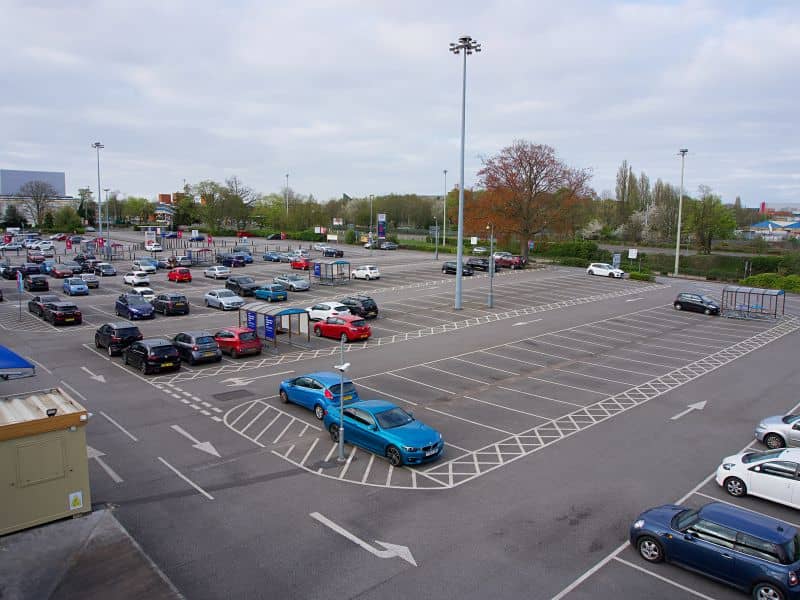
A shopping center built in 1985 was designed around cars that don’t exist anymore in the same numbers. Wider lanes for full-size sedans. Generous space for angled parking that modern lots rarely use. A single main entrance built for a traffic pattern that’s since shifted twice over. None of this shows up as a problem during a walkthrough. It shows up the moment a buyer tries to fit a modern tenant, a drive-through lane, or extra building space onto a layout never built for any of it.
This is the quiet reason ALTA Surveys come up so often in commercial redevelopment deals. Parking isn’t just asphalt. It’s a layout choice baked into the site decades ago, and that choice can either support or quietly block whatever a buyer has planned next.
Existing Parking Configurations Can Limit Future Redevelopment Opportunities
Older commercial sites carry parking layouts built for a different era of retail and office use. A property built decades ago might meet its original parking rule with room to spare, yet still fall short of what a modern tenant or a denser redevelopment plan actually needs. The asphalt is there. The legal right to use it the way a buyer wants isn’t always there either.
Redevelopment plans run into this constantly. A buyer might want to add a second building. They might want to turn part of a parking field into new retail space. They might bring in a tenant that needs more parking than the site offers today. Each of these moves needs the same starting fact: how much usable parking does the site provide right now, and how much of it can legally shrink without breaking zoning rules or old agreements tied to the land.
An ALTA Survey gives buyers that starting point. It maps the parking field with real numbers. It shows how many spaces exist and how they’re laid out. It shows how that layout relates to the property’s legal lines. A plan built on guesses about parking can fall apart fast once real numbers come back from a survey instead.
Shared Parking Agreements Can Influence Property Use and Expansion Plans
Commercial parking rarely belongs to just one property. This is especially true in shopping centers, office parks, and mixed-use sites built with shared space in mind. Neighboring businesses sometimes hold a recorded right to use part of a parking field that, on paper, belongs to the property being purchased. These cross-parking deals get set up once during original development. They then stick around through every change of owner that follows.
A buyer looking at redevelopment needs to know about these deals before finalizing any plans, not after. A parking lot might look fully open for a new building footprint. But it might carry a decades-old agreement requiring it to keep a set number of spaces open for a neighboring tenant. Shrinking that space without dealing with the agreement first can create a legal problem on top of a planning one.
Finding these arrangements early changes how a buyer approaches the deal entirely. Sometimes a shared parking deal turns out to be a small, easy fix. Other times it kills an entire redevelopment idea before any money gets spent designing it. Either way, knowing the answer before closing beats finding out after.
An ALTA Survey Documents Parking Areas Alongside Other Site Improvements
Parking lots rarely stand on their own. They connect to access drives, curbs, sidewalks, and landscaped islands, and all of these pieces interact in ways that matter once redevelopment plans start taking shape. An ALTA Survey captures this whole picture, not just the parking spaces by themselves.
A few specific pieces usually get documented together on a commercial site:
- Parking space counts, drive lane widths, and overall lot layout
- Access drives and curb cuts linking the lot to nearby roads
- Sidewalks, landscaped islands, and other features tied to setback rules
This combined picture matters during due diligence. It lets buyers compare what physically exists against what the title records and recorded plats actually say. A drive lane that crosses a property line without a documented easement can turn up during a survey review. So can a curb cut added without the right permits. Either one can become a redevelopment headache later if nobody catches it now.
Redeveloping Commercial Sites Often Requires a Close Look at Vehicle Circulation
Parking capacity is only part of the picture. How vehicles actually move through a site matters too, from the street to a parking space to a building door. A site with plenty of parking but poor flow can still struggle to support a new tenant, especially one with delivery trucks or heavy customer traffic.
Buyers redesigning a site for new tenants need to see how entrances, drive lanes, and parking fields work together right now. They need to see this before assuming a new layout will work. A delivery route that loops around the back of a building today might clash with a planned expansion in that exact spot. A customer entrance that works fine today might turn into a bottleneck once a nearby parking field becomes new building space.
This is where survey data becomes a planning tool instead of just a paperwork item. Seeing how flow works on a site today gives architects and planners a real starting point to redesign from. That beats guessing at relationships that took years of small changes to settle into their current shape.
Lenders and Investors Value Clear Site Information Before Funding Redevelopment Projects
Redevelopment projects carry more risk than buying a property that’s already up and running. Lenders price that risk into their decisions. Before funding a project built around reworking parking or adding new construction, a lender wants proof of what exists on site today. A buyer’s description of the site isn’t enough on its own.
An ALTA Survey gives lenders, title companies, and attorneys that proof. It uses a format they all know and trust. Investors looking at a redevelopment deal use the same document to check whether a buyer’s plans are even possible, given the site’s current parking, access, and boundary conditions. A redevelopment pitch that skips over an existing cross-parking agreement or an undersized access drive raises questions a survey would have already answered.
This is part of why ALTA Surveys come up so often in commercial redevelopment financing. They give every party in the deal the same accurate, standard picture of the site. That makes it far easier to judge whether a plan is realistic before anyone commits real money to it.
Frequently Asked Questions
Why do buyers request an ALTA Survey for redevelopment projects?
It shows clear details about boundaries, improvements, parking areas, and other site features that may affect future plans.
Can parking layouts influence commercial property redevelopment?
Yes. Existing parking setups, traffic flow, and shared agreements can all affect how a site gets used or expanded.
Does an ALTA Survey show parking lots and access drives?
Yes. It documents visible improvements and other features that matter during a commercial deal.
Who commonly requests an ALTA Survey?
Commercial buyers, lenders, title companies, attorneys, developers, and investors often request one.
When should an ALTA Survey be completed?
It’s usually done during the due diligence period, so all parties can review the findings before closing.