You’ve watched weeks or months of construction come together. The crew is packing up. The building looks exactly like the plans. So when your contractor mentions needing one more survey before everything wraps up, it’s natural to wonder why.
An as-built survey at the end of a project isn’t a formality. It’s a record of exactly what was built, where it sits, and how it measures up against what was approved. And it protects more than one person in the process.
What Changed Between the Plans and the Finished Project
Here’s something most property owners don’t think about: construction plans rarely survive contact with the real world without some changes.
A contractor shifts a building a few feet to avoid a buried utility line they didn’t know about. Drainage gets rerouted after the grading crew finds the slope runs the wrong way. A garage ends up slightly closer to the property line because the original stakeout had a small error that no one caught until the foundation was poured.
None of these changes are unusual. They happen on most projects, large and small. The problem is that when a project is done, the approved drawings no longer match the finished site. An as-built survey creates a new, accurate record of what actually exists.
Why Your Contractor Cares About This
Contractors deal with disputes. It’s part of the job. A property owner claims the driveway wasn’t built where it was supposed to be. A neighbor says the new fence crosses the property line. A building inspector questions whether the structure meets setback requirements.
Without an as-built survey, resolving these disputes comes down to memory, photos, and who has a better argument. With one, there’s a certified document that shows exactly where everything landed.
That document protects the contractor. If the building is where it was supposed to be, the survey says so. If a later dispute claims otherwise, the contractor has a signed and sealed record to stand on.
It also closes out the job cleanly. Many construction contracts require an as-built survey before the final payment is released. Lenders on construction projects often require it before converting to permanent financing. The survey isn’t an afterthought. It’s a condition of finishing.
What It Means for You as the Property Owner
The contractor isn’t the only one who benefits. Once the project is done and the crew is gone, you’re the one who owns the property and everything on it.
An as-built survey gives you a verified record of your finished improvements. If you sell the property in five years, a buyer or their lender may ask for documentation of what was built and when. If you want to add to the project later, an engineer or architect needs to know the exact location of what already exists. If a neighbor ever challenges where your fence or addition sits, you have a document that answers the question.
Think of it as the closing paperwork for your construction project. Just as a real estate closing produces a deed that records ownership, an as-built survey produces a record of what was built. Both matter long after the transaction is done.
What the Survey Actually Documents
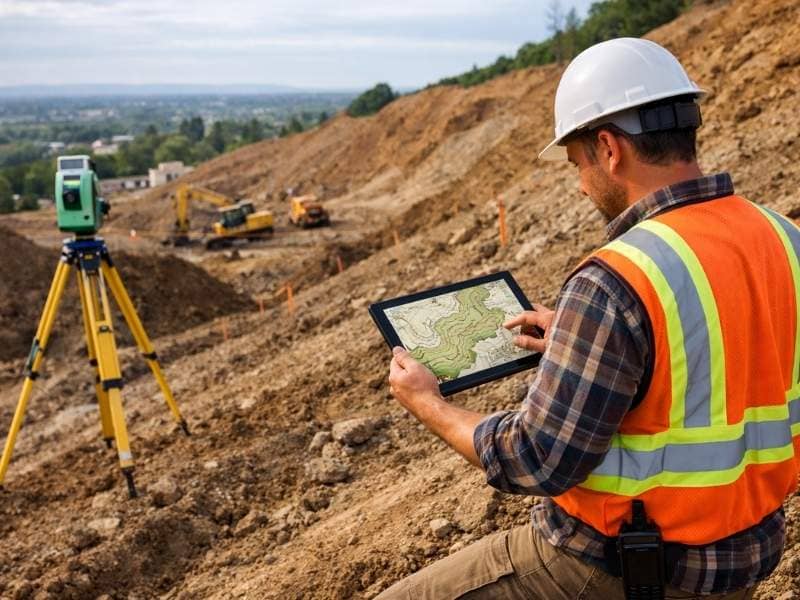
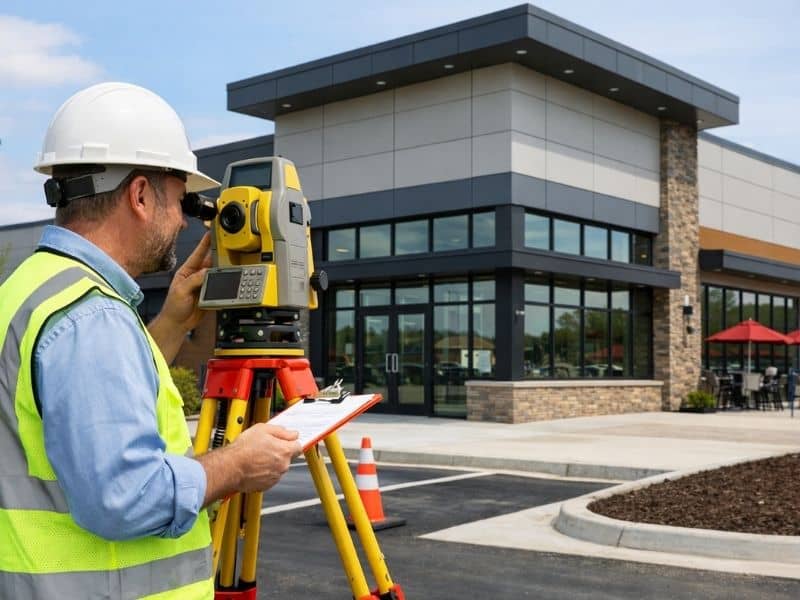
The surveyor visits the finished site and measures the real location and elevation of everything that was constructed. That typically includes:
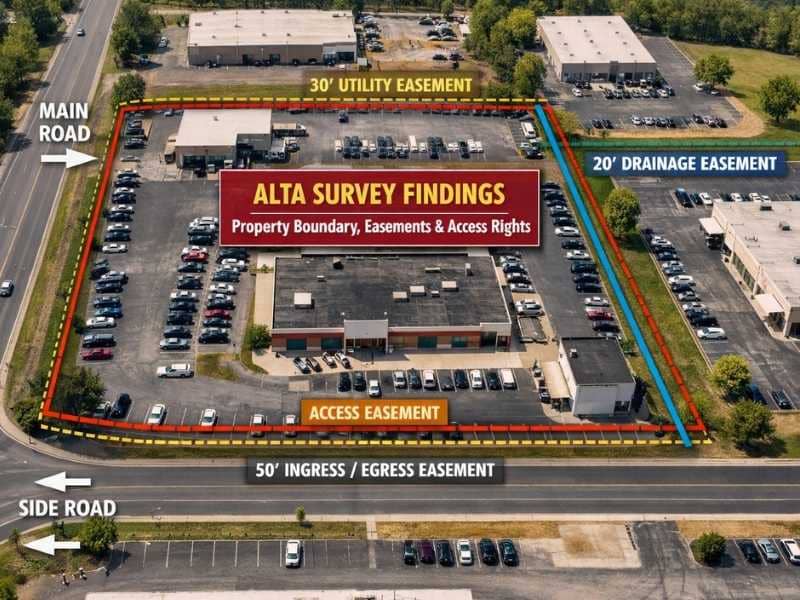
Building placement. The exact distance from the structure to each property line. This is how setback compliance gets confirmed. Zoning rules require buildings to sit a certain distance from lot lines, and the as-built survey verifies that the finished structure meets those requirements.
Finished floor elevation. For properties in or near flood zones, this measurement matters for insurance and permitting. The finished floor elevation on an as-built survey is the number used to verify flood zone compliance after construction.
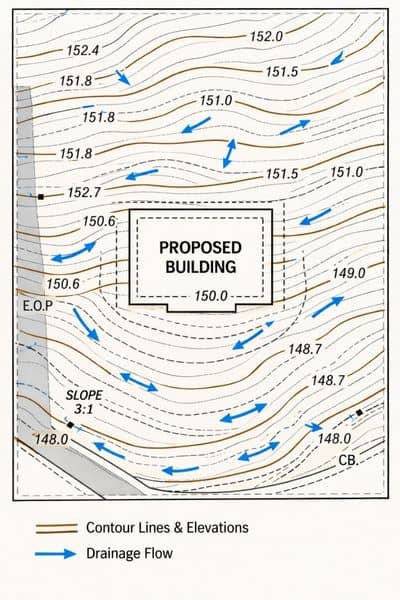
Site improvements. Driveways, parking areas, walkways, fences, pools, retaining walls, and any other permanent features get located and documented.
Differences from the approved plans. If anything was built in a different location than what the permit drawings showed, the as-built survey captures that difference. Small deviations are common and often acceptable. Larger ones may need to be addressed before a certificate of occupancy is issued.
When Problems Show Up
Most of the time, an as-built survey confirms that everything is fine. But when it finds a problem, finding it now is far better than finding it later.
A structure built too close to a property line is a setback violation. If it’s caught before the certificate of occupancy is issued, there may be options: a variance, a minor adjustment, or an agreement with a neighbor. If it’s discovered years later by a future buyer’s title company, it becomes a cloud on the title that can complicate or kill a sale.
A finished floor elevation that doesn’t meet flood zone requirements can affect insurance coverage and may require corrective work to satisfy the permit. Catching it immediately after construction is much easier to deal with than discovering it when you’re trying to refinance.
The as-built survey isn’t looking for problems to create. It’s looking for problems so they can be resolved while the project is still fresh and the parties involved are still accessible.
How Long It Takes and What It Costs
Most residential as-built surveys are delivered within five to ten business days after the surveyor completes the field visit. Commercial projects with larger footprints or more complex site improvements take longer.
Cost depends on the size and scope of the project. A straightforward single-family home with no flood zone complications typically costs less than a larger commercial site with multiple structures and detailed documentation requirements.
The practical way to think about the cost is this: it’s a fraction of the total project budget, and it produces a document that has value for as long as you own the property.
Frequently Asked Questions
Can the contractor prepare the as-built survey themselves?
No. An as-built survey must be prepared and certified by a licensed land surveyor. A contractor, project manager, or architect cannot produce a document that carries the legal weight of a certified survey. The surveyor’s seal and signature are what make the document usable for permitting, title, and legal purposes.
Does every construction project need an as-built survey?
Not every project requires one, but most new construction and substantial renovation projects do, especially when a building permit is involved. Requirements vary by jurisdiction. Some counties and cities require an as-built survey as a condition of issuing a certificate of occupancy. Others leave it to the lender or title company to require one. Check with your local building department early if you’re unsure.
What if the as-built survey shows the building is in the wrong spot?
It depends on how far off it is and what the local rules say. Small deviations within acceptable tolerances are usually not a problem. A more significant deviation may require a variance from the local zoning board, an agreement with an affected neighbor, or in rare cases, physical changes to the structure or site. The sooner this is identified, the more options you have to resolve it.
Is an as-built survey the same as a record drawing?
They are related but not the same thing. A record drawing (sometimes called red-line drawings) is typically prepared by the contractor or engineer and shows changes made during construction. An as-built survey is prepared by a licensed land surveyor through actual field measurements. The survey is the legally certified version. Both may exist on the same project, but they serve different purposes.
How long is an as-built survey valid?
There is no fixed expiration date, but an as-built survey reflects the site as it existed at the time of the survey. If significant improvements or changes are made to the property after the survey is completed, the document no longer reflects current conditions. For permitting, title, or lending purposes, the party requesting the survey may specify a timeframe within which the survey must have been completed.